
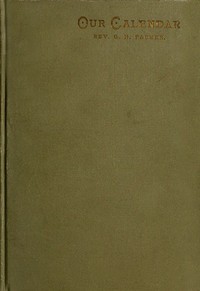
Our Calendar by George Nichols Packer
Most of us just live inside our calendars. We tap dates into our phones, mark birthdays, complain about M— er... Monday mornings. We don't wonder where this system came from. Lucky for us, George Nichols Packer did wonder, and he wrote Our Calendar to let us in on a secret: the whole thing is a glorious, messy accident.
The Story
The book starts way back when people used the Moon to mark passing months—that ran into trouble when the seasons drifted, messing with planting and holidays. Enter Julius Caesar, who invented the 'Julian Calendar' by basically copying the Egyptians and tacking on leap years. Fast forward to the 1500s, and the dates have drifted again because leap years were done imperfectly. That’s when Pope Gregory XIII and his mathematicians showed up to drop a calendar reform so big it was dubbed 'New Style.' Catholic countries adopted it instantly; Protestants resisted it like teenagers refusing hand-me-downs. And doing away with entire days to sync up again? That leap was huge. In 1752, for British folks, September 2nd was just... wiped out. They went to bed after the 2nd and woke up on the 14th!
Why You Should Read It
What I love about Packer's writing is how he avoids a dusty history-hole. He makes the astrologers and clergymen — absolute back-of-the-book nerds — sound like players in heated courtroom drama. There's a detective vibe to tracing where our month lengths came from. Why are July and August both bigger months, says the rich vocal guy? Because an ancient successor, Augustus, supposedly stole a day from November to make the August—his month—as long as July—exalting his lookalike Caesar. The book proves that numbers and star charts weren't boring textbooks; they were political power moves. If you thought gerrymandering was crafty, adjust a month name!
Final Verdict
Who needs this book? You, if you've ever connected intellectually with that odd brain fascination—like those who collect old coins or re-watch 'Connections' explaining technology’s messy path. The writing stays at an easygoing TATE-level clean but keeps nudges for deeper curiosity. Perfect for teachers stuck refreshing 'what date fell out of spot,' history buffs who’ll slice their edge conspiracy into newfound appreciation for Pope–, and anyone open to a genuinely attractive little niche knowledge binge. I love revisiting entries – pack's thought is supreme trivia bait. Gift this to a smart friend too silent with the 'January's name' origin. After Our Calendar, you walk second-hands forward entirely: armed, subtly powerful knowing you could explain any Wednesday's story.
Light with dark but cheek-trust analysis chisel—reward repeated ‘uh-ha– we found’ reading.
This digital edition is based on a public domain text. It is now common property for all to enjoy.
Charles Anderson
2 months agoThe peer-reviewed feel of this content gives me great confidence.




Sarah Williams
2 months agoA sophisticated analysis that fills a gap in the literature.